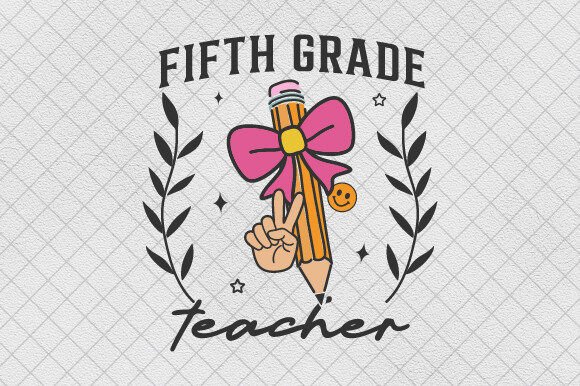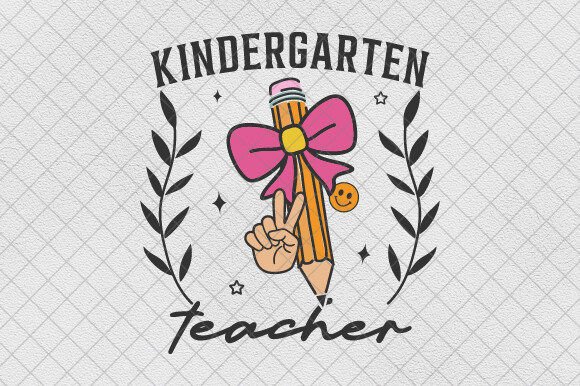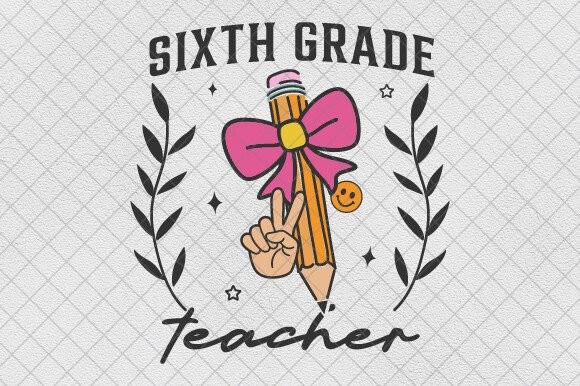
Sixth Grade Pencil Bow Teacher Coquette
As someone who’s digitized, stitched, and sold hundreds of embroidery designs—especially for teacher-themed apparel and classroom gifts—I opened Sixth Grade Pencil Bow Teacher Coquette with quiet curiosity. Not hype. Not assumptions. Just the kind of focused attention you give a design before committing thread, time, and client trust to it. I’d already planned a small-batch run of embroidered canvas tote bags for a local elementary school’s “Teacher Appreciation Week” pop-up—and this design landed squarely in my shortlist.
A First Stitch Feels Like a Conversation
The moment I loaded the SVG into my digitizing software (and previewed the PNG at 300dpi), the mood clicked: playful but polished, nostalgic but current. It’s not just a pencil—it’s a soft-curving graphite shape wrapped with a delicate bow, slightly tilted like it’s mid-scribble. The “Sixth Grade” text sits cleanly beneath, not cramped, not oversized—just right for a 4"–5" hoop. There’s no clutter. No forced whimsy. Just confident simplicity that reads instantly, even at arm’s length.
This isn’t a generic “teacher” design. It speaks specifically—to the energy of middle-grade educators, the charm of handmade classroom gifts, and the subtle pride of a student who *gets* how much their sixth-grade teacher shaped them. That specificity is rare—and valuable—for Etsy sellers, boutique owners, and craft fair vendors building authentic, story-driven collections.
Where It Shines—and Where It Asks for Care
I stitched Sixth Grade Pencil Bow Teacher Coquette on three real-world substrates: a medium-weight cotton twill tote, a French terry sweatshirt, and a lightweight baby onesie. Here’s what stood out:
- Tote bags & aprons: Excellent clarity. The satin-stitched bow held its shape beautifully over the textured weave—no sinking or distortion. Ideal for small shop merchandise where durability and visual impact matter.
- Sweatshirts & hoodies: Worked best with medium cutaway stabilizer. The pencil’s tapered tip and bow loops stayed crisp—even on brushed fleece—because the design avoids ultra-fine interior details that vanish in nap.
- Baby items & tea towels: On the onesie, I used a tear-away + light cutaway combo. The fill stitch density felt balanced—not so dense it stiffened the fabric, not so sparse it looked patchy. For kitchen towels, I’d suggest stitching it near the hem or corner, letting the clean lines complement functional simplicity.
But—and this is where experience matters—Sixth Grade Pencil Bow Teacher Coquette isn’t built for every surface. Avoid it on highly stretchy knits without proper backing, curved cap fronts (the bow’s symmetry can warp), or ultra-thin fabrics like voile without testing first. Tiny lettering? It’s legible down to ~3/8" height—but if you’re planning a 2" version for a child’s cap, check how the “Sixth Grade” text renders in your machine’s preview mode. And on dark fabric? The design relies on contrast—so test your thread colors carefully. A warm charcoal gray thread on navy, for example, reads richer than stark white.
What It Does for Your Craft Business
This isn’t just another graphic—it’s a quiet confidence-builder for your brand. When customers see Sixth Grade Pencil Bow Teacher Coquette on a finished product, they don’t just register “teacher gift.” They feel intention. They sense care. That translates directly to perceived value, repeat orders, and word-of-mouth referrals—especially among educators who spot thoughtful details instantly.
For Etsy sellers, it slots neatly into listings like “Personalized Teacher Tote Bag,” “Embroidered Sweatshirt for Back-to-School,” or “Nursery-Ready Baby Onesie Set.” Its clean silhouette also scales well into printable mockups—no jagged edges or transparency bleed in the PNG file. And because it’s delivered in EPS 10, SVG, and high-res PNG, it adapts smoothly whether you’re prepping for embroidery, screen printing, or digital product previews.
Practical Designer Notes Before You Stitch
Before using Sixth Grade Pencil Bow Teacher Coquette in any project—personal or commercial—here’s what I do, every time:
- Test on scrap fabric matching your final substrate—especially if using textured, stretchy, or dark materials.
- Check stitch density in your embroidery software. If it feels heavy for lightweight items, consider reducing fill density by 5–10%.
- Confirm hoop size compatibility. This design fits comfortably in a 4"x4" hoop—but verify your machine’s exact usable area.
- Inspect small details like bow loops and pencil eraser highlights. Zoom in. Are they clean? Do they simplify well at smaller sizes?
- Preview in black-and-white to assess contrast balance—critical for readability on varied backgrounds.
- Use appropriate stabilizer: Cutaway for knits and wearables, tear-away for stable wovens, and fusible + tear-away for lightweight baby items.
- Review licensing terms from the original store. Since this is listed as a digital embroidery file intended for commercial use, confirm whether resale of finished embroidered products is permitted—and whether attribution is required.
Final Thought: Design With Purpose, Not Just Pixels
Sixth Grade Pencil Bow Teacher Coquette works because it understands its role: it’s not the centerpiece of a chaotic design wall—it’s the quiet, confident detail that makes a custom tote feel special, a baby onesie feel meaningful, or a holiday gift feel personal. It doesn’t shout. It resonates. And for embroidery designers, craft business owners, and creative entrepreneurs building real products for real people—that’s the highest compliment a design can earn.
If you’re curating graphics for teacher appreciation, back-to-school launches, or heartfelt handmade gifting—this one earns its place in your working library. Just remember: even the best embroidery file needs thoughtful execution. Test it. Trust your eye. And let the design do what it was made to do—speak clearly, stitch cleanly, and connect meaningfully.